Every country's flag tells a story — but few flags carry as much weight as the Egypt flag. From the ancient banners carried by pharaohs into battle to the modern tricolor flying over Cairo today, the Egyptian flag is a living testament to one of the world's oldest civilizations. If you're planning a trip to Egypt, understanding the symbolism behind this iconic national emblem will enrich your travel experience in ways you never expected.
The Ancient Origins: Egyptian Banners Before the Flag
Long before the modern Egypt flag existed, the ancient Egyptians used standards, banners, and ceremonial emblems to represent identity, power, and divine connection. These weren't fabric flags as we know them — they were crafted from wood, gold, and bronze, topped with sacred carvings of gods, animals, and hieroglyphs.
Each banner symbolized a deity, city, or military unit. Soldiers carried them into battle as a visual guide during the chaos of warfare, while priests displayed them during religious ceremonies as conduits for divine power. You can still see depictions of these ancient military standards carved into the walls of temples in Luxor and Aswan — a sight that makes every history-loving traveler pause in awe.
Sacred Symbols on Ancient Egyptian Banners
The ancient Egyptian symbols found on military and religious banners are the same ones you'll encounter throughout your journey across Egypt:
- The Ankh (Key of Life): Symbolizing immortality and divine protection — you'll find it carved on nearly every temple wall from Karnak to Abu Simbel.
- The Scarab Beetle: Representing Khepri, the god of transformation, rebirth, and renewal. Look for scarab amulets at the Egyptian Museum in Cairo.
- The Sun Disk of Ra: The god of creation whose symbol emphasizes life, light, and divine authority — prominently displayed at the temples of Luxor.
- The Uraeus (Cobra): Worn on pharaonic crowns, signifying sovereignty and royal protection.
- The Double Crown (Pschent): Representing the unification of Upper and Lower Egypt — one of the most powerful royal emblems of the ancient Egyptian civilization.
These symbols weren't just decoration — they were believed to channel divine power and protect the nation. Today, they're among the most photographed attractions for visitors touring Egypt's archaeological sites.
How the Egypt Flag Evolved Through the Ages
The Ottoman Era (1517–1798)
During Ottoman rule, Egypt didn't have its own national flag. The Ottoman Empire's red banner with a white crescent and star flew over the country, marking Egypt's status as a province with no unique emblem of its own.
Muhammad Ali Dynasty (1805–1922)
When Muhammad Ali Pasha gained control in 1805, Egypt began forging its own identity. By 1826, a red flag with three white crescents and three stars was introduced — symbolizing Egypt, Sudan, and Hejaz under his governance. This marked the first semblance of a uniquely Egyptian national identity.
The Kingdom of Egypt (1922–1952)
After declaring independence in 1922, King Fuad I adopted a new flag: a green background with a white crescent and three stars. The three stars represented Egypt's Muslim, Christian, and Jewish communities — reflecting the country's cultural and religious diversity that continues to define its character today.
The 1952 Revolution and the Republican Era
The most significant transformation came after the 1952 Egyptian Revolution, which ended the monarchy and established the Republic. The revolutionary government adopted the red, white, and black horizontal stripes as part of the broader Pan-Arab movement — a design that connected Egypt to its Arab neighbors and signaled a new era of independence.
The Modern Egypt Flag: What the Colors and Eagle Mean
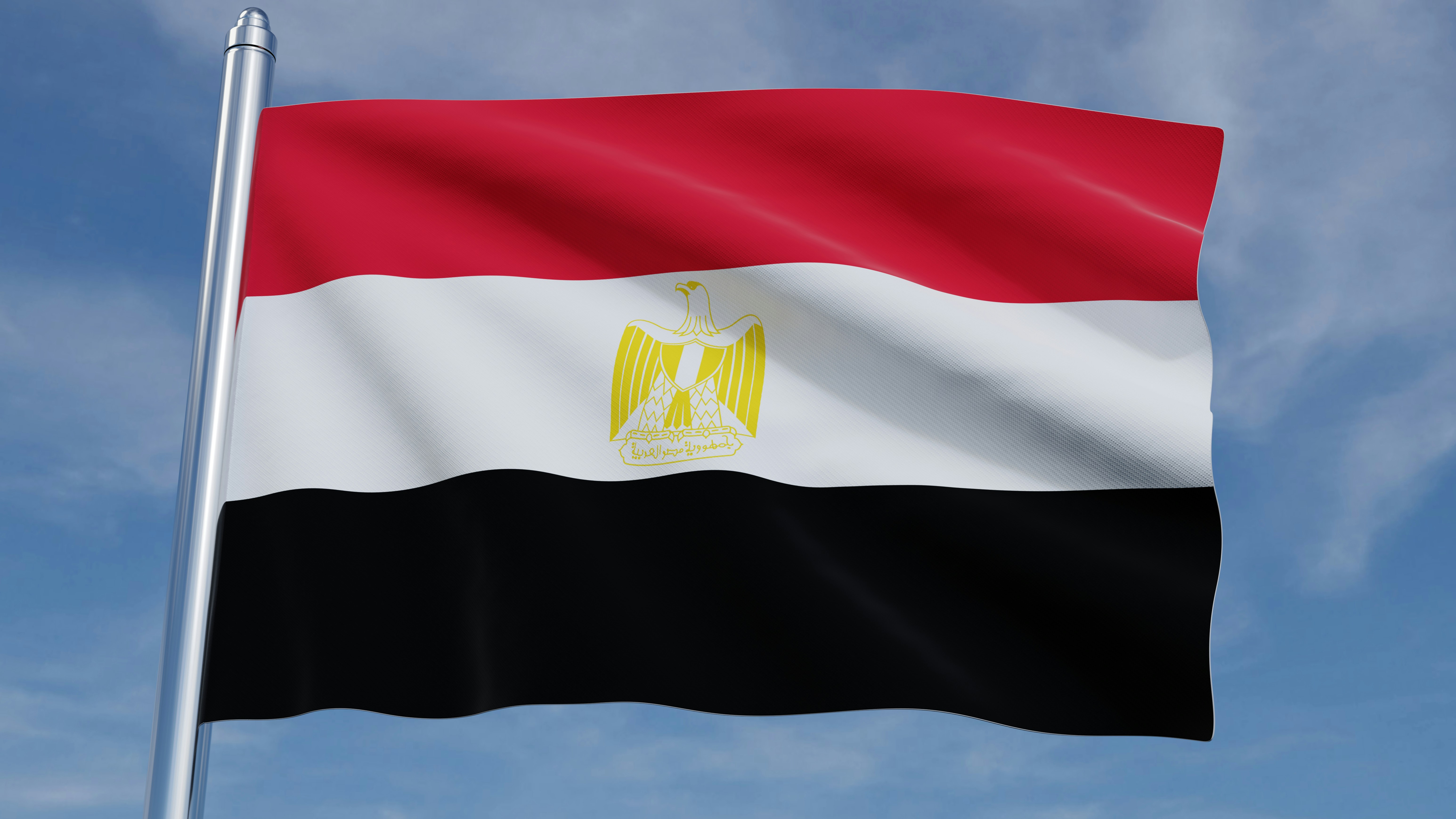
The current Egypt flag, officially adopted in 1984, features three horizontal stripes and a golden eagle at the center. Each element carries profound significance:
The Three Colors
- Red (top stripe): Represents the struggle and sacrifices made during Egypt's fight against colonization. It honors the blood of the martyrs who fought for independence and justice.
- White (middle stripe): Symbolizes peace, hope, and a bright future for the nation. It reflects the aspiration for progress and the relatively non-violent transition of the 1952 Revolution.
- Black (bottom stripe): Signifies the end of oppression under colonization — the triumph over hardship and injustice.
The Eagle of Saladin
At the center sits the Eagle of Saladin — a golden emblem holding a shield and a scroll bearing "Arab Republic of Egypt" in Arabic. Named after the legendary 12th-century leader Saladin (Salah al-Din), who defended the region against the Crusaders, the eagle symbolizes strength, sovereignty, and a connection to Egypt's illustrious medieval past.
You can visit the Citadel of Saladin in Cairo — the very fortress he built — and stand where this legacy began. It's one of Cairo's most iconic landmarks and a must-see on any guided tour of Cairo.
Where to Experience Egypt's History as a Traveler
Understanding the Egypt flag isn't just academic — it's a gateway to deeper travel experiences. Here's where the flag's symbolism comes alive:
- The Egyptian Museum, Cairo: Home to the world's largest collection of ancient Egyptian artifacts, including royal emblems, scarab amulets, and the treasures of Tutankhamun.
- Karnak & Luxor Temples: Ancient banners and sacred symbols are carved into every column. A day trip from Hurghada to Luxor lets you witness them firsthand.
- The Pyramids of Giza: The eternal symbol of pharaonic power — the civilization that created Egypt's first "flags." Book a Cairo day trip from Hurghada to see them.
- The Citadel of Saladin: Where the eagle on today's flag finds its inspiration — medieval Islamic architecture meets breathtaking Cairo panoramas.
- Nile River Cruises: Float past the temples where these ancient symbols still stand. A Nile dinner cruise in Cairo gives you a magical evening perspective.
- Aswan & Abu Simbel: Remote temples featuring some of the best-preserved ancient Egyptian royal emblems and hieroglyphs in the world.
Fun Facts About the Egypt Flag
- The Pan-Arab colors (red, white, black, and gold) are shared with Iraq, Syria, and Yemen — connecting Egypt to the broader Arab world.
- Egypt's flag has changed at least 8 times since the Muhammad Ali era, each change marking a pivotal moment in the nation's history.
- The Egyptian flag is prominently displayed during October 6th celebrations — commemorating the 1973 war — one of the most patriotic events in the Egyptian calendar.
- Ancient Egyptian military divisions each had their own banner — much like modern sports teams have their own logos and colors.
- The ankh symbol from ancient banners has become one of the most popular souvenir items sold across Egypt's bazaars, including Khan El Khalili in Cairo.
Plan Your Cultural Tour of Egypt
The story of the Egypt flag — from ancient sacred banners to the modern tricolor with the Eagle of Saladin — mirrors the story of a civilization that has shaped human history for over 5,000 years. Every temple wall, every museum artifact, and every sunset over the Nile is a chapter in this incredible narrative.
At Ease Travel, we design guided tours and private tours that go beyond sightseeing — our expert local guides bring these stories to life, connecting you to the deep cultural heritage behind every monument you visit.
Whether you're exploring the top tourist destinations in Egypt, planning a day trip from Hurghada, or booking a complete Sharm El Sheikh holiday — every journey with us is designed to immerse you in the real Egypt.
📞 Book your cultural tour: 01105001389 | WhatsApp
Reference: For a detailed deep-dive into ancient Egyptian flags and royal emblems, see Discover the Full Meaning and Symbolism behind Egypt Flag Across the Ages by Egypt Tours Portal.